

热电冷联产系统的节能
Energy efficiency of combined heating, cooling and | |
| 摘要 根据动力装置,热电冷联产可分为外燃烧式(蒸汽动力装置)和内燃烧式(燃气动力装置)。分析了外燃烧式热电冷联产系统节能条件,表明内燃烧式系统具有节能优势和潜力。 关键词:热电冷联产 供热供冷 节能 Abstract According to the kind of power plant the combined heating, cooling and power production system can be divided in to external combustion and internal combustion types. Analyses the conditions of energy efficiency for the external combustion systems. Explains the advantage and energy saving for the internal combustion systems by a example. Keywords:combined heating cooling and power production heating and cooling energy efficiency | |
0 引言 |
 ,常规热电机组的总效率
 ,分产时发电与输电效率ηe=0.35,分产时锅炉供热效率ηf=0.9,分产时压缩式制冷系统性能系统COPCRS =2.5。


利用外燃烧式热电联产的热能供热制冷,与利用直燃/锅炉热相比总是节能的,但与性能系数较高的电动制冷和热泵相比较,则需要汽轮机有较高的进汽压力和热驱动制冷机有较高的性能系数。所以说,外燃烧式热电冷联产的节能是有条件和有局限性的。
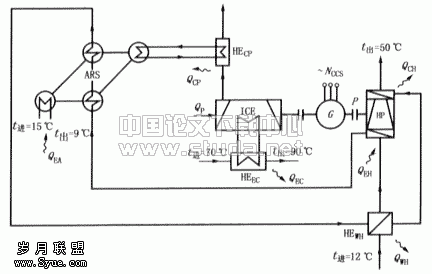
内燃烧式热电联产热能是从回收燃烧产物或冷却气缸余热所得,不影响发电量,故具有节能优势。文中介绍的复合式联产系统,与分产相比系统节能率达40%。可见,通过优化设备配置和系统流程,内燃烧式热电冷联产还有很大的节能潜力。
在区域供热和供冷应用中有条件地以内燃烧式或燃气-蒸汽联合循环联产装置取代外燃烧式联产装置是一种趋势。当然还需针对不同供能对象和负荷条件进行设计,解决好能量利用的合理性与用户条件的现实性的矛盾,才能收预期的节能效果。
近来,微型燃气轮发电技术在美国和日本兴起,设备发电容量30~80kW,发电效率达26%~28.5%。这种小型化、高效率和分散型的发电装置,有可能成为21世纪能源技术的主流,并将掀起"电源小型分散化"的技术革新热。可以想见,小型分散化热电冷联产系统将会与之伴随。
1 陈君燕,冷热联供系统的能耗估算,暖通空调,2001,31(3).
2 Mornhed Gel, Casten T R. Innovation in district heating and cooling 1984-1994 and their economic impact. ASHRAE Trans, 1995,101, part I:911-916.
3 Havelsky V. Energetic efficiency of cogeneration systems for combined heat, cold and power production. Int J refrig, 1999, 22(6):479-485.